
Typically, in Overworked and Underpaid, we aim to interview current designers to learn more about their journeys and experiences that shaped them. In a very special interview, we had the opportunity to speak to the progenitor of modern army graphics and a current army legend, Pringle64.
Designed by Cassie
In the present state of the community, graphics are a synonymous part of an army’s identity, featuring custom penguins reflective of uniforms and media to accompany websites, event postings, and honorifics. But it’s very unknown how this style even formed, a question as old as the origins of armies. Pringle64 is recognized as a 2009 Army Legend for founding the Fire Warriors and Ninjas, but described in his bio as “the first great graphics designer”.
The Age of No “Good” Graphics
Pringle learned design for Club Penguin, using a program called The Print Shop and later switching to GNU Image Manipulation Program (GIMP). At the time, Pringle and Woton both led Roman Fire Warriors, and he primarily designed for his own army. He recalls that he was the first to try layered raster graphics, with others opting for Microsoft Paint, a pre-installed, minimalist raster editor with little functionality. He cites his inspiration as the existing cheats sites.
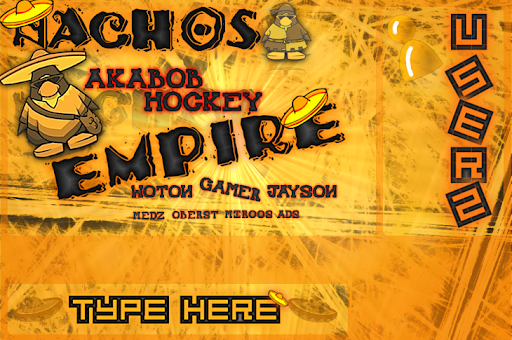
One of Pringle’s earliest works in 2008-2009
Patient 0: Club Penguin Army Central
Regarded as a legendary media site today, Club Penguin Army Central had humble origins. Founded by Woton, the site attempted something innovative: army media. Like a standard media site, this meant they needed branding, and Pringle had an indispensable skill that fit this requirement. Cited in the CPAC Staff Hall of Fame, it reads:
Pringle64 was the longest serving member of CPA Central until the retirement of Sklooperis, in 2011. He designed graphics for CPA Central since the site’s inception, and set the precedent for armies’ best graphics designer displaying their work here at CPA Central.
He described the design as intimidating, having no other media site to reference at the time. With the goal of a news site to serve the community, he chose the iconic rainbow aesthetic to match the collection of armies envisioned to participate in media and reflect impartiality.

The very first CPAC header designed by Pringle
Alongside graphics, Pringle also helped with administering and setting up the WordPress website’s widgets, navigation, and layout.
Emergence of a Design Community
In a very unique position as one of the first designers, Pringle continued to work around the community. With CPA Central’s design complete and his status in the community immortalized, it wasn’t long until other figures began to capitalize on the new profession of designing. Tomb147, who is known better for his leadership of Night Warriors, pushed the boundaries of custom penguins. Pochoma, known for his achievements with Fire Warriors and Ninjas, was a close friend of Pringle and learned to design for both armies and his cheats and guides site.
Following CPA Central and switching to a more administrative/laid-back position, Pringle had not done any big commissions and phased out of the community around 2012-2013. Despite remaining hands-off, his skills translated well to pursuing photography, videography, and AV production projects outside of the community.
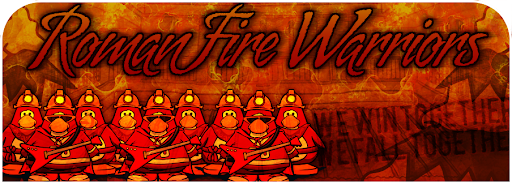
Roman Fire Warriors header from 2011-2012, considered the ‘pinnacle’ of his style
Lasting Impact on Graphics
Pringle was a pioneer who created a standard where nothing existed, which has carried on even present-date. He had a valuable set of skills during the void of 2007-2008, a mix of designing with media and website development that I’d argue created the first formal army website.
As his era ended, CPA Central’s 2014 awards featured a ‘Designer of the Year’ category that introduced names like Dxdzn, Monsoon, Blizzard, Apollo, and others. With more armies emerging and a rapidly growing community, new designers sought the need to create branding referencing none other than the guidelines he set.
Interviewing Pringle64
Following the post ranking influence of designers, which was published in Club Penguin Armies some weeks ago, we are more than fortunate that Pringle reached out to make a few clarifications, but also answer questions about his time as a designer. Special thanks to Dino for this well-done interview, truly the best person in CPA to probe the mind of a genius.
Obviously when you started, you used an early version of GIMP, which both then and now do differ greatly tools wise from Photoshop. What would you say the biggest difficulties were?
I remember a lot of things were janky, for starters the version of GIMP back then for Mac needed X11 to work, in simple terms that meant it relied on a separate GUI server since it was basically a Linux port. This was eventually fixed, but it caused a lot more crashes and instability so I got into the habit of constantly saving. The big one I can remember is that GIMP didn’t have a very effective tool for making alpha masks and a lot of features similar to Photoshop were locked away in many sub-menus under Layers. GIMP served me well for what I was making, if I had known about vector graphics then I would have needed Inkscape (learned after retirement in high school)
Vector graphics are definitely a big thing, yeah. Speaking of, Club Penguin is definitely different nowadays due to the move away from Flash, as the SWFs and their assets were vector-based. Now assets are more accessible due to spritesheets. If they were as accessible to you then, would you say this would’ve affected your ability to make graphics?
Actually no to be honest! It would have helped a lot though, I didn’t know there were pre-made asset sheets! Also any assets made in the game after 2013 were inaccessible to me, just because of time. The reason for “no” is because I manually decompiled the original SWFs to extract the resources. Back then I went for PNGs (it’s how I made the CPA Central newspaper bg) but today I am extracting .svg or .fla
Also on the topic of Flash, during the time you were working at CPAC (and especially after), Flash began to decline with the advancements in HTML and CSS, such as responsive design due to the advent of mobile, changes in how websites are structured, and frameworks like Bootstrap. If you were to make an army site now, what would you do differently both design and experience wise?
Sorry this response is a bit long, you asked something that’s been on my mind too. Funny you ask, I’ve been commissioned to potentially design for both WV and also my home army, FW. Every tool you mentioned has the potential to be utilized and applied to CP armies like they are used by web devs for web apps.
Bootstrap is a great idea to potentially make a new Club Penguin Army theme for WordPress. Using the templates and building blocks it provides is a cleaner approach to an army website, instead of trying to mod Digg3 with outdated methods (the header using background-image to make a bigger size, I was the first to implement that hack).
The biggest weakness of CP army sites back then and now is the same: too much dependence on raster graphics. That’s a very early Web 2.0 approach to styling websites. With modern technologies like HTML5 and CSS3, along with using SVGs safely, I would be trying to make an army site that has virtually no PNGs on the landing page, with the one exception I can see being screenshots of events.
Obviously I’m sure you do not use GIMP now, so what programs, languages, and tools do you use now for web and graphic design, and what would you recommend for anyone looking to start in both?
I still have GIMP installed, but hardly use it. Like many I was taught Adobe Creative Suite in HS/college: Photoshop, Illustrator, InDesign, Premiere, After Effects. Even with a student discount the price has become a massive barrier to entry, so nowadays I manage to keep my Adobe products permanently activated… 😉 but doing that is too much work for a beginner.
What is crazy about today vs back then is web apps are now able to do almost anything a desktop program can. I highly recommend the free https://photopea.com for beginners, it’s Photoshop without the exclusive Adobe stuff like AI. It looks like they have “Vectorpea” now too!
I started on WordPress in January 2007, and it is still a standard CMS used by millions of organizations. However, if you want to learn web design for real, start by making an HTML page fully from scratch by referencing the Mozilla Developer Network (MDN) pages on HTML/CSS, they are the best. Also use Inspect Element in your browser to understand how stuff has been made. Avoid AI until you are able to understand what you are doing.
I haven’t gotten into it but the last few years have seen AI (LLMs) being able to generate not only graphics but HTML/CSS and beyond. Avoid them for code generation until you can walk on your own.
Actually, funny enough, my follow-up question is about the last thing you touched upon. What place do you feel Artificial Intelligence has in graphic design and web development? Is there something hobbyists can learn from it to improve their skills, and likewise, anything you’d recommend restraint-wise?
Everyone has their opinion on LLMs and how they impact people’s jobs, skillsets and stuff like data centers being bad for the environment. When it comes to education they are a double edge sword. Sadly AI has changed schools for the worse, because suddenly the labor that lets you learn something like writing English or manually styling CSS can be done with prompts. So I guess to sum it up be careful. Designers like me existed before AI, and nothing beats the feeling you get from making something with your own brain.
And my final question, probably the biggest question I have for you is one I’ve asked other designers I’ve interviewed for this column. Although more people can afford graphics than ever before due to people being older, the loss of Xat has eliminated Xats and Days. As a result, many designers are undercharged (or not charged at all). What is your perspective on that dilemma?
That’s a good one. I think about the community first – I designed the CPA Central graphics and felt like it was a way to give back to a community that gave me many awesome experiences and having that perspective first is important. That being said the amount of work that goes into handmade graphics and websites merits compensation and it was a problem then too!
Ultimately it was a good thing to leave Xat, Discord servers are designed for “clans” or “guilds” which CP armies are. I think the brutal simple answer to this dilemma is people will pay for what they think is worth it. It’s a two way street for designers because if you charge, you’re competing with a designer who offers it for free. One example to think about is: no one pays for memes. People actually like making them because they don’t take as much effort and gets you instant attention. So the money-less solution is collectively more appreciation for the work that’s put in. A lot of the time it’s a labor of love even if you manage to profit from it. Maybe CPA should think about making a designated month for graphics competitions that have a real cash prize to celebrate our designers.
Pringle is the father of modern graphics as we know it, and his interview gave many insights into not just the challenges and experiences he built during his time, but also his wisdom was shaped as his creative mind continued to push forward. To put the influential designer post in perspective, the first three ranks are all progenitors of the style we know, and the designers that follow turned the style into the diverse and aesthetically pleasing graphics we know today. Did you enjoy this special edition of the Overworked and Underpaid column? Do you agree with Pringle’s opinions as stated above? Make sure to share your thoughts.
Zambi4
Graphic Designer & CPA Opinion/Editorial Writer
More Information

Professional Club Penguin player