
Club Penguin Armies is one of the most interesting and ambiguous platforms ever invented. Over the years, it stood as a double agent for playful diplomacy and as a battleground where peace was proven through conflict. Yet one question lingers: what might have evolved if this distinctive balance had shifted from frozen shores to a world shaped by blocks and limitless creation?
Designed by catsiee
Minecraft 101
For those unfamiliar with Minecraft, or who have heard of it but don’t fully understand it, Minecraft is a three-dimensional sandbox game created in 2009 by Markus Persson, also known as Notch. It was later developed by Mojang Studios and eventually purchased by Microsoft in 2015. The game has no fixed objective, giving players enormous freedom and autonomy to create, explore, and shape their worlds with virtually endless possibilities. From creating magnificent structures to constructing multiplex redstone mechanisms, players can build virtually anything they desire.

A great example of a unique yet infamous build. The Minecraft Uncensored Library lets players read texts that are banned in real life, turning blocks into a symbol of free speech. It is blacklisted in 9 countries.
Why Minecraft Is Perfect
Minecraft’s framework works almost impeccably because of a combination of basic systems, clever design choices, and tremendous testing for optimality over the years. The game emphasizes stability and smoothness, and its simple yet classic block-based foundation makes building effortless, allowing players to enjoy the game peacefully without feeling constantly overwhelmed. A Minecraft server can virtually embrace any ideology, structure, or mode of operation – whether its goal is to function as a peaceful, cooperative environment or to adopt the distinct dynamics and complexities of the real world.
Club Penguin Armies, on the other hand, focuses on organizing events, hosting tournaments, and fostering competitive interactions. Unlike Minecraft, players cannot build, modify, or fully shape the world, as Club Penguin was originally created primarily for socializing and participating in activities such as mini-games. The game’s mechanics are deliberately simple, designed for socialization rather than creativity or open-world experimentation. The current generation of gamers often want more freedom, creativity, and opportunities to explore and customize their experiences. The method of battling during wars and tournaments can feel stale and repetitive, as players often rely on spamming tactics and moving in formations. Many attendees struggle to cooperate effectively, making it difficult to coordinate and enjoy the gameplay.
INTRODUCING: Minecraft ARMIES
The theorization of Minecraft Armies is a revolutionary, yet debatable, idea regarding how it would envision the landscape distinctly and how it would make significantly more sense than playing on a platform like Club Penguin. The idea re-evaluates the landscape of online competitive communities and advances a thought in which gameplay, strategy, warfare, and other minor but important activities would fluently merge, giving rise to a more logical and suitable environment than a platform like Club Penguin.
How Would This Work?
In this world, players can freely explore beyond pre-existing maps and create any formations they choose They can freely create factions, forge alliances, develop their own economies, and expand both their player base and overall strength. Consequently, they can claim regions, designate historical or significant locations, and organize their territories in ways that reflect strategy, creativity, and short/long-term planning. Players can work together to write server rules outlining do’s and don’ts, guidance on how to accomplish specific tasks, and standard processes for events, campaigns, and wars. They can create rank hierarchies, assign leadership and citizen tasks, and put in place procedures for administration of resources, trade, and diplomacy.
Beyond this remarkable foundational pursuit, Minecraft Armies can leverage plugins and mods to establish engaging and unique mechanics, such as custom classes, specialized abilities that simplify the work of operators and anti-cheat systems to prevent mass hacking. Furthermore, servers can include plugins that track and report who steals goods or conducts griefing, ensuring accountability and justice throughout the community. Such systems allow for an enhanced and balanced environment for players who wish to play the game peacefully.
Plugins also open the doors for different minigames that players wish to play. With plugins, server operators can construct sub-servers or specialized locations for these minigames, allowing many activities to run concurrently without interfering with the main army activity.
Challenges To Consider
The project faces several critical challenges that require careful attention, despite its vast potential and ambitious vision. Foremost among these is the technical and infrastructural demands of running a server, which necessitate the continuous operation and regular backup of sub-servers, worlds, and plugins. Additionally, managing large-scale activities introduces further complexity, as it requires specialized technical expertise to ensure stability and prevent disruptions. And of course, our beloved – the man, the myth, the mastermind – Superhero123 – the creator of Club Penguin Army Battleground would need a chiropractor for eternity in order to do all of that.
Furthermore, while the platform allows unparalleled freedom of expression, this very flexibility can result in disruptive behavior by players, creating a symphony of issues such as griefing, theft, use of unethical hacks, and exploitation of game mechanics like duping. Addressing these challenges requires the continuous and tedious involvement of moderators and administrators to ensure the server runs smoothly and maintains a fair, balanced environment.
One Server to Rule Them All
Although the concept of Minecraft Armies is largely theoretical, there exists one real-world example that demonstrates its immense potential. Though it does not perfectly mirror the structure or dynamics of modern Club Penguin Armies, this server has successfully implemented many of the mechanics and systems discussed earlier, and it is none other than the legendary Shivcraft — a server with almost ten years of history and lore, created by army veteran and former OGCP Leader of the Nachos, Shivertoe2 – known widely as Shiver, or simply Shiv-was a charismatic and influential figure within the army. His tenure, however, eventually came to an end after he was couped from leadership due to what many old heads described as his Napoleonic decision-making style.
He originally created this server for fun with a small group comprising different armies, but little did he know that it would eventually play a significant and influential role in the broader army community. Over the years, the server has evolved, with major players emerging from both old and new eras of Club Penguin, fostering unity and collaboration across diverse communities. Shiver oversees the server alongside his longtime close friend Bryce – a former Water Vikings leader, who played a major role in shaping and maneuvering Shivcraft’s evolving dynamics.
Shivcraft features different teams, similar to armies, with each operating under its own unique organizational framework, comprising distinct hierarchies, leadership roles, and responsibilities, alongside well-defined systems for decision-making, fabulously administering their territories, and effective conflict resolution. This system ensures that each team performs autonomously yet contributes meaningfully to the broader server community.
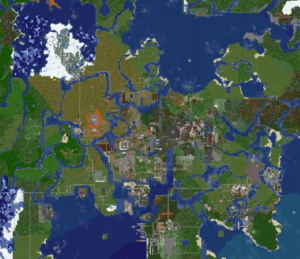
The server map of Shivcraft.
INTERVIEW
Club Penguin Armies reached out to Bryce for an exclusive interview to discuss his time in Shivcraft and the legendary lore that lies beneath the server’s history. Unfortunately, Shiv was not available at the time to participate in the interview
I. What caused you to create Shivcraft 2.0, and did you expect it to have such a broad impact on the army community?
Shivcraft was originally formed as a realm in 2022 by a small group of players including myself, Shiver, Kevin, Talex , Gob, and Cait, amongst a couple others. We definitely did not expect the popularity we have achieved, nor some of the negative stuff like the JP. It was originally just supposed to be a small server for a few friends, who have long since been retired from the army community.
II. How did you bring together members of several armies and what obstacles did you experience in forming an orderly community?
Several times over the past 3 years, we’ve felt the need to expand the server. Every time we were in search of expansion we’d contact leaders of prominent armies or other retiree groups.These expansions obviously did not come without their fair share of troubles. Many times we’d just butt heads with the new groups, or they fundamentally misunderstood how the server operates.
III. Many players may ask why you chose the name “Shivcraft” over something like “Brickcraft.” What was the reasoning behind this unusual name choice?
I did not create the server. Shivertoe2 has ran and paid for most of our servers for the better part of a decade and is the true creator. The server is named after him to show appreciation for the years of server upkeep and the years of hair loss we have undoubtedly caused.

IV. If you had to pick a favorite era in Shivcraft’s history, and how influential was it in shaping the server as it is today?
My favorite era is undoubtably the first few months of the server. We all lived in the same area, which kickstarted the first official conflicts of the server. The Brick Wars were a series of conflicts between me and basically every other player, over disputed borders and how our area should be developed. The Brick Wars ended with me being exiled to the south, which created the city of Bricktown. Bricktown ended up becoming the de facto capital of the server and has defined conflicts and political endeavors for years.
V. Looking ahead, what do you see for Shivcraft and Minecraft Armies in general? Do you think this approach will inspire future army communities?
Firstly, I wanna say that the future of Shivcraft is BRIGHT. Undoubtedly we’re nearing a golden era, as we push for the formalization of law. Congratulations to all of the admin team for making this happen by the way, especially Pjayo for dealing with the JP!! Knowing what we know now, this is gonna be wildly important. Doubly so because we’re expecting a huge influx of players again, and we want the ground rules to be clear so everyone has the best possible experience on the server. Anyway, as far as armies on Minecraft outside of Shivcraft go? Not my place to speculate. Excitement for Shivcraft has been great to see, and it feels as if it’ll be the main vessel for army growth into Minecraft. Laws and general rules have been talked about for a long time and I think that’s gonna be what drives the server to the next level. After that is settled, we want to take a look at some fun roleplaying concepts like a United Nations equivalent, as well as perhaps more plug-ins. Whatever the people want, we can try to provide!
In conclusion, while Club Penguin Armies undoubtedly established the framework for online army communities, the notion of Minecraft Armies represents a significant advancement in both design and interaction. By offering various opportunities and ideas in such a platform, players can coordinate, collaborate, and compete in ways previously unobtainable. Do you think we should permanently move from Club Penguin to Minecraft? Did you enjoy reading this post?
MtJordan II
Associate Editor
More Information

you look like fridge
[…] “What If Club Penguin Armies Moved to Minecraft?” Written by MtJordan II […]