
For most of us who have been around long enough, 2025 will be remembered less for what happened and more for what did not. As 2025 draws to a close, it has become impossible to ignore a rather uncomfortable reality: major armies, as a collective, have sunk into a level of stagnation that is unprecedented in the modern era of this community.
Designed by Edu14463
When we look back at earlier years, whether the late 2010s OG revival era or even the early 2020s, one thing stands out immediately: wars happened. They were frequent, imperfect, sometimes messy, but undeniably, it was what made this community alive. Armies clashed not because every outcome was guaranteed, but precisely because it never was. Risk existed, and with risk came excitement, recruitment, growth, and relevance.
Looking back at CPA history, it becomes clear that the years most remembered by the community are those anchored to conflicts and large-scale competitive moments. In the early years of the army community, to mention 2012 and 2013 as primary examples, CPA existed in an environment where warfare was normalized rather than avoided. This era itself saw multiple World Wars and relevant conflicts. As an illustration of this point, consider the January 2012 Army of Club Penguin vs. Nachos war. Needless to say, both armies had their own dramatic dynamics with each other. Though what prompted Nachos’ leader, Hurricanex1, to declare war was, in his own words:
Hola Nachos,
Well over the past couple of weeks the ACP has really been pushing our buttons. I’m not about to give you a 2,000 word speech about why we are declaring war. We are declaring war because we are sick of ACP pushing around armies and thinking they can do what they want. Last month the ACP posted a post saying
“Who wants to fight? I’m sick of silly war declarations, giant alliances being formed in ten minutes, wars that end in three days. They’re terrible. AreYOU the leader of an army? Are you interested in fighting the Army of Club Penguin in a war that could be awesome? Then again, are you afraid of fighting us? Please, don’t be!”
Well ACP, you found war!
I am sure such words bear a slight degree of similarity to our days.
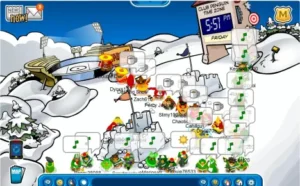
ACP and Nachos fight for Abominable
Additionally, consider how armies did not feel compelled to publish lengthy war declaration posts, justify their intent through paragraphs of political framing, or search for excuses tied to map claims to legitimize simple land invasions and even raids. Wars began because leaders decided to fight, plain and simple. No one needed to manufacture casus belli, draft a multi-page war plan, or debate whether an invasion would be deemed “publicly acceptable.” Conflict was understood as an expected part of the game, not something that required public persuasion or moral validation. That simplicity made warfare faster, more dynamic, and more frequent, and it kept the focus where it belonged.

Nachos and RPF fight for Blizzard while Purple Republic unexpectedly raids them, July 2013
Even in the modern era, 2023 stands out as a clear return to large-scale conflict with the outbreak of World War IX, involving every major army of the time and temporarily reshaping the competitive landscape. The rivalry between ACP and the Elite Guardians brought the best wars of recent years: the 2023 Summer War, the Christmas Crusade (United Front Alliance vs. EGCP and Winged Hussars), and the unforgettable 2024 Centenary Solstice War, ending with more than 100 battles.
Although 2024 did not mirror the scale of a full World War, it nonetheless benefited from the residual momentum of 2023, marked by active tournaments, rivalry-driven matches, and heightened competitive engagement that spread across the army community. Armies like the Secret Service, Doritos, and ACP protagonized memorable episodes of warfare. In each of these periods, warfare or sustained competitive pressure produced narratives, movement, and purpose, underscoring how conflict, when embraced, has consistently been the defining force behind CPA’s most memorable years.
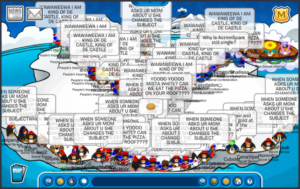
Defense of Migrator
In contrast, 2025 has been defined by conservatism. What wars come to your mind, dear reader? What major drama? There was none. The largest armies have spent most of the year entrenched behind alliances, and a fearful inertia so dense that meaningful conflict becomes nearly impossible. Now that the façade of the perceived ‘morally good’ (e.g.: ACP and the People’s Imperial Confederation) armies clashing against their ‘morally evil’ (e.g.: EGCP and DCP) counterparts has ended, the major side of the community settled into a sick feeling of stability. Warfare has been summarized as a fight against ideologies, perhaps a reflex of our modern society.
This year has undeniably showcased a thriving Small/Medium army community and genuine growth in overall numbers, with major armies reaching over 80 troops in tournament battles, arguably the early seeds of a new golden age, even if large-scale warfare at the top has been absent. While major armies have stalled, S/M armies have done the opposite: they fought. Armies such as Void Troops, Romans, Dark Warriors, PIC, and Templars demonstrated this most clearly during the Second Divine Reckoning War, proving that meaningful conflict does not require massive size, only willingness.
These S/M armies may lack the raw numbers and historical weight of some majors, but they possess something far more essential right now: courage and a genuine spirit of warfare. They take risks, engage without overthinking legitimacy or optics, and understand that armies exist to fight. In doing so, the Small/Medium armies proved themselves to be more like true armies than all of their major counterparts. And that should be a wake-up call.
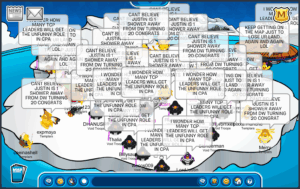
VT and TCP warring in the Second Divine Reckoning War
An Appeal To Major Armies
Armies do not decline because they lose wars; they decline precisely because wars do not happen. Troop activity in armies does not die from defeat; it dies from boredom. Members leave not when they lose battles, but when months pass without a reason to log on.
If your entire strategy revolves around minimizing risk, then the only guaranteed outcome is irrelevance.
Alliances were once tools, temporary (sometimes not) arrangements used to advance strategic goals. In 2025, they have become insulation. Major armies surround themselves with so many ‘friendships’ that the political cost of conflict outweighs the desire to fight. If your army fears declaring on another because you do not want to lose friendships, then I am sure your leadership needs to grow up and become mature. Who will ever ditch real friendships over virtual warfare? Well, the immature people. When we were kids in this community, we somehow understood something that now seems lost: we knew how to fight each other fiercely in-game and still remain friends outside of it. Of course, exceptions are granted. Now, as we are all older and supposedly more mature, we have paradoxically lost that trait. Conflict is taken personally, rivalries bleed into real resentment, and the fear of fallout outweighs the joy of competition. Perhaps the answer is not to become more “strategic” or more “professional,” but to remember how we played when we were younger, when wars were intense but not personal. Maybe, in that sense, the community does not need to grow up further. Maybe it needs to be a little more like kids again.
Perhaps the most damaging trend of 2025 has been the over-politicizing of warfare. Extensive war-plan documents are drafted, sometimes longer than the wars themselves would ever be. Multiple internal votes are held: High Command votes, staff votes, advisory votes. Decisions that should take hours stretch into weeks. This is compounded by fear. Fear of internal backlash. Fear of being criticized afterward for making the “wrong call”. Grow up and act like a leader.
Wars are the mechanism through which armies recruit, train, bond, and grow. When leaders treat every war as a personal risk rather than an opportunity to test their skills, the entire community suffers.
- This Administration has been working extensively to cut off bureaucracy in order to make warfare flourish, as seen in the recent Mapping the Map Summit. Though no changes in rules will ever work if YOU do not move and make wars happen. This era of CPA Org is open to do whatever it can do to foster more wars. Take the most of this opportunity.
2025 is practically over. Nonetheless, 2026 does not have to be another lost year. And that depends entirely on whether major armies choose comfort, or choose the game itself. The responsibility does not lie with regulators, rulesets, or S/M armies solely. It lies with those who have the influence and size to shape the era. And right now, that power is being wasted. Move, before this place loses its essence. I hope the five major armies answer my appeal and call to arms. We are together.
Edu14463
Chief Executive Producer
More Information

Army Legend. Former Water Ninjas leader. Founder and Former Leader of the Elite Guardians of Club Penguin. Currently serving as Chief Executive Producer in Club Penguin Armies.
[…] “An Open Letter to Major Armies” Written by Edu14463 […]